
Play now
globle-game.com
Globle at a glance
Globle gives you one hidden country a day and a globe you can turn. Name countries until you find it; every wrong guess is coloured by how close its nearest land border is to the answer. There is no guess limit, so the only score in Globle is how few guesses you used. This page explains the colour scale, the border-distance rule, and an opening strategy that shortens a round.
How to play Globle
- 1
One hidden country, one globe
Open Globle and you get one mystery country and a rotatable 3D globe. Unlike Wordle, there is no six-guess limit: you keep guessing until you find the answer, and your result is simply how many guesses it took. One country is chosen each day and everyone playing gets the same one, so the Globle puzzle is a shared daily challenge rather than a random quiz.
One mystery country per day
- 2
Enter a country name
Type a country name into the guess box and submit it. Globle checks the name against its own country list, so an unrecognised spelling will not be accepted. Some alternate and older names are allowed — Burma for Myanmar, for example — and acronyms such as UAE work for a few multi-word countries. If a name is rejected, try the common short form first.
Type a country, then submit
- 3
Read the heat colours
Each incorrect guess is painted onto the Globle map. The colour is a heat scale: cool white or pale yellow means far away, orange means warmer, and deep red means you are close. The answer turns green when you find it. Globle also lists your guesses in order of proximity, so the warmest one stays visible even when the globe has been rotated away.
Colour = border proximity
- 4
Distance is measured at borders
The colour is driven by distance, but not between capital cities. Globle defines it as the minimum distance between the two countries' land borders, measured along the Earth's surface. Territories and water borders are excluded, and Globle shows a 'closest border' figure in kilometres. A reading of 0 km means the two countries share a land border directly — the strongest clue available.
A 0 km hit narrows the field
- 5
Turn, zoom and pan the globe
Use the mouse to inspect the Globle sphere from every angle: left-click and drag to rotate, the scroll wheel or middle button to zoom, and right-click to pan. Because the colour is painted on the country itself, a hot guess can sit on the far side of the sphere until you turn it. Rotate back to your warmest guesses before committing to the next one.
Inspect the globe from every angle
- 6
A new puzzle at local midnight
The Globle mystery country changes and your guesses reset at midnight in your own time zone, not at a single global moment. There is one puzzle per day, and an optional account only backs up your statistics — it is not needed to play. Practice mode lets you keep going and can reveal the answer, but it does not affect the daily Globle puzzle.
One puzzle per local day
- 7
Share the guess count
When you finish, Globle offers a shareable result so you can compare guess counts without spoiling the country. A high-contrast Colour Blind mode is available in Settings if the heat scale is hard to read. Globle runs in a desktop or mobile browser, needs no install, and is free with ads; an optional subscription removes them.
Share without spoiling the answer
Globle tips and strategy
Open with continental anchors
Open a Globle round with large anchor countries on different continents rather than guessing near where you expect the answer. Russia, China, Brazil, the United States and Australia each light up a wide arc of the map, and because the Globle colour scale measures the nearest land border, comparing two or three of them usually identifies the right continent quickly. Spending three guesses on anchors is cheaper than spending six drifting around one region.
Treat 0 km as a border hit
Watch for the 'closest border' number hitting 0 km in Globle. It means your guess shares a land border with the answer, so the remaining candidates are that country's neighbours and nothing else. From there, work along the border chain one country at a time instead of jumping to another continent. This is the point where a Globle round usually collapses from ten guesses to two or three.
Skip spelling variants
Do not spend Globle guesses on spelling variants. Alternate names and acronyms are accepted, but they resolve to the same country, so submitting Burma after Myanmar just repaints the same shape. Keep a mental note of what you have already tried, or read the proximity-sorted guess list before typing — it is the fastest way to avoid duplicate guesses in a long Globle round and keeps your count honest.
Ignore grey territories
Treat grey areas and disputed borders as noise, not data. Territories appear in a neutral colour when their parent country is guessed, and their position does not affect the colour of that country. Some borders are disputed, and the Globle country list follows an external framework rather than UN membership alone, so an outline that looks wrong to you may simply reflect that framework. Report corrections through the official channel.
Read colour as border distance
Treat the Globle heat colour as a border-distance reading, not a judgement about how far apart two capitals look. A guess that seems visually close can come back cool if a stretch of water separates the two countries, because water borders are excluded. Conversely, a small country on the far side of a continent can be deep red when its border sits near the answer. In Globle, trust the colour over your mental map.
Use oceans as elimination
Use the ocean as an elimination tool in Globle. Because territories and water borders do not count towards distance, island guesses in Globle often produce misleading colours that tempt you towards the wrong hemisphere. If a chain of guesses stays cool across an entire landmass, rule that landmass out and rotate the globe to the other side rather than repeating guesses in the same neighbourhood.
Work from the sorted guess list
Read the sorted guess list as carefully as the globe. The Globle guess list ranks your guesses by proximity, which means the top entry is your best anchor even if it is currently on the hidden side of the sphere. Each new guess should be chosen relative to that best entry, not relative to whatever you typed last. This habit matters more as Globle rounds get longer and the colours start to converge.
Globle vs other daily games
Worldle
Guess limitWorldle starts from a silhouette and answers each wrong guess with distance, direction and a proximity percentage, all about one shape. Globle hides the map entirely and paints your guess on a real globe instead, where hotter colour means closer, so you triangulate position rather than name an outline. A silhouette player recognises borders; a Globle player reasons about where countries sit relative to each other. The two habits pair well, because each trains one half of the map sense the other leaves cold. The pair also shares the Teuteuf studio habit of one shared puzzle per day, so neither game ever strands you mid-run.
Geoconnections
Reset clockGeoconnections deals sixteen geography tiles at once and asks you to sort them into four hidden groups of four. Globle narrows the whole world down to one mystery country through repeated distance feedback. Geoconnections rewards seeing the connection between flags, landmarks and outlines; Globle rewards knowing how close Paraguay sits to your last guess. Both come from the daily-puzzle tradition, but grouping and triangulating are different muscles, and players who like one usually keep the other for balance. Both games are free in the browser, and an optional Teuteuf Premium plan removes ads across the whole family if you settle in.
Timeguessr
Scoring directionTimeguessr shows a street view photo and asks you to place its year, leaning on visual clues like cars, signs and fashion. Globle asks where, never when, and its feedback is distance rather than a timeline. A Timeguessr round is archaeology from imagery; a Globle round is navigation by proximity. The pair covers two different questions about the world and makes a tidy back-to-back morning ritual for geography fans. Both are free with no account.
Globle FAQ
How does Globle measure how close my guess is?
It is the minimum distance between the two countries' land borders, measured along the Earth's surface — not between their capitals. Grey territories and water borders are excluded. Globle shows this as a 'closest border' figure in kilometres; 0 km means the two countries share a land border.
Can I play Globle with colour blindness or low vision?
Switch on the high-contrast Colour Blind mode in Settings. It changes how the heat scale is presented so cool and warm guesses stay readable without relying on the red-to-white gradient. The mode is built into Globle, so no browser extension is needed, and it does not alter the distance rules.
Which countries count as valid guesses in Globle?
Globle uses the framework published by Sporcle in its essay 'What is a country?' rather than a strict UN membership list. That is why some disputed entries appear while many dependent territories do not. If a name is rejected, try an accepted alternate spelling before assuming the country is missing.
What time does the Globle mystery country reset?
The Globle mystery country changes and your guesses reset at midnight in your own time zone. The cutover is local rather than global, so a friend in another time zone may briefly be on a different puzzle. Practice mode is available if you want to keep playing immediately.
Does Globle accept alternate country names or acronyms?
Yes, for a number of them. Globle accepts alternate and historical names — Burma for Myanmar is the example given — plus acronyms such as UAE for the United Arab Emirates. Since these resolve to the same country, there is no advantage in submitting both forms; one guess is enough.
Why is my Globle answer different from a friend's?
Usually because an update has not reached both browsers at the same time. The developer recommends a hard refresh — Ctrl + Shift + R on desktop, with the equivalent gesture varying on mobile — to pull the latest Globle version. Time zones are the other cause, since reset happens at local midnight.
Where do I report a wrong border or a missing country in Globle?
Raise it politely on the Globle GitHub issues or send a direct message to the developer on Twitter; those are the channels the official FAQ names. Borders are disputed in some regions and the list follows an external framework, so a difference from your atlas is not always a bug.
Globle update notes
2026-11-12
Checked on 7 November 2026 against the official Globle how-to-play page, FAQ and Settings documentation, plus the public rating record. Rules below follow what those sources document. The daily mystery country, its answer and any hint are deliberately not reproduced here.
Globle's heat scale measures minimum land-border distance, not capital-to-capital distance; 0 km means a shared border.
Reset is local midnight, guesses are unlimited, and an optional account only backs up statistics.
The only score shown is the public Backloggd rating; no local poll, hint page or daily answer is invented for this page.
Similar games
More daily games like Globle
Keep exploring nearby daily games from the same category or play style.
Timeguessr
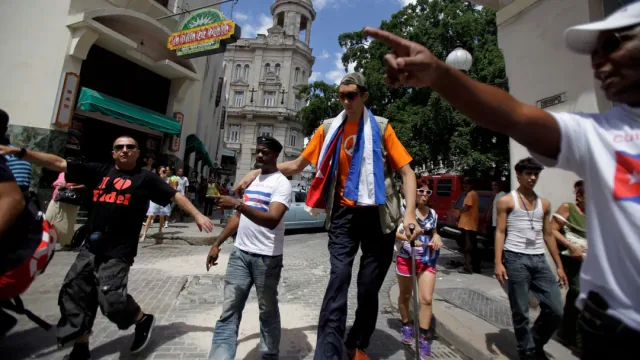
Pin a historical photo to the world map, then guess the year it was taken. Timeguessr has solo rounds, duels and archives.
Krillion
Krillion gives seven timed prompts and one answer each, scored by how rarely other players would think of your pick.
WhereTaken USA
Guess the US state in the WhereTaken USA photo of the day, then clear the facts, landmark and city bonus rounds.
Geoconnections
Sort sixteen flags, countries and photos into four hidden groups of four in Geoconnections, the daily puzzle by Teuteuf Games.
Daily Tens
Name all ten entries on the Daily Tens top-10 list before five wrong guesses, then see your percentile against everyone else.
Mathler
The target number is given in Mathler: use six guesses to uncover the hidden equation behind it, across Easy to Extreme levels.