
Play now
poople.io
Poople at a glance
Poople is a four-letter word ladder with a fixed finish. Every numbered day gives you a random starting word, and you change one letter at a time through real words until the chain reaches POOP. The score is Extra Guesses beyond the shortest route. This page explains the one-letter rule, why that particular target is awkward, and how to read the stats panel.
How to play the Poople word ladder
- 1
Open the numbered daily board
Open poople.io and look at the board. Poople shows a numbered daily puzzle, a four-letter starting word at the top and the fixed target POOP. The start word changes every day, so everyone who opens the same numbered puzzle works from the same place. There is no account to create and nothing to install before the first move.
Random start, fixed target
- 2
One changed letter per move
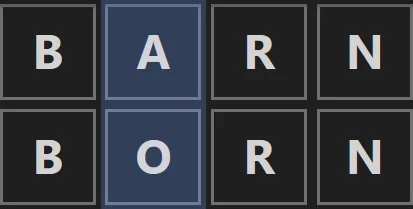
Change exactly one letter at a time. Poople illustrates the rule with barn becoming born: one position differs, and the result is still a real word. Every word in your chain must be four letters long, must be an English word the game accepts, and must differ from the previous word in one position only. A jump of two letters will not submit.
One position per step
- 3
Submit with Enter to extend
Type a candidate with the on-screen keyboard or a physical one, then press Enter. Poople checks both the word and the single-letter difference before adding it to the chain. If a move is refused, read the current word again and try a different bridge rather than repeating the same guess. The board keeps your chain visible as it grows.
Real four-letter words only
- 4
Keep POOP as the finish
Aim for POOP, which never changes. The About page explains why that target is awkward: its consonant-vowel-vowel-consonant shape makes words that look similar at a glance surprisingly hard to reach. Two vowels in the middle means many nearby four-letter words are one letter away on paper but not reachable through a valid chain.
A tricky vowel pair
- 5
Count the extra guesses
Try to use as few steps as possible. Poople scores a solve with Extra Guesses, the number of moves beyond the shortest available route, and shows the previous day's shortest path once that puzzle has closed. The site labels each daily with a number and can note when a route was the only shortest one, so a clean solve is a measurable result rather than a feeling.
Shortest route is the mark
- 6
Check the stats panel
Read the stats panel after finishing. Poople tracks wins, average Extra Guesses, current streak and best streak, and plots a distribution of how many extra guesses your solves took. The distribution buckets run from a perfect zero through six or more, which makes it easy to see whether you are improving or just getting easier starting words.
Wins, streaks, distribution
- 7
Return for the next puzzle
Come back for the next numbered puzzle. Poople began as a family car-ride game called the to-poop game, and the About page says it was revived online after Wordle appeared. That origin is why the rules are deliberately short: a start word, a target, one letter per step and a daily reason to open the page again.
One new puzzle each day
Poople tips for fewer extra guesses
Plan backwards from POOP
Work backwards from POOP as well as forwards from the start. Words with an O in both middle positions are one move from the target, so naming a few of them first gives you a finish line to aim at. In Poople a chain is only as good as its last bridge, and a promising opening that cannot reach a double-O word wastes several moves. The shortest Poople chain usually starts at the ending, not the beginning.
Hunt for bridge words
Look for bridge words that share three letters with where you stand. Because exactly one letter may change, every legal next word in Poople is one of those neighbours. When a direct path stalls, list the possible neighbours mentally and pick the one that also moves a second position closer to the target. That is the whole puzzle in one habit. Neighbours are few, so listing them is cheap and fast.
Score the detours
Treat Extra Guesses as the score, not the length of the chain. Poople does not punish exploration with a guess limit, but every detour shows up in the number. If a move does not reduce the distance to the target, undo the plan rather than committing it. A shorter route is worth more than a fast one that wanders. A clean zero in the distribution is worth protecting.
Finish to hold the streak
Protect the streak by finishing the numbered puzzle even when the route is messy. Poople records a current streak and a best streak, so a solve with several Extra Guesses still counts. Use the distribution panel to separate a genuinely hard starting word from a bad habit, then bring the shortest-path thinking back to tomorrow's board. Streaks measure showing up, not solving perfectly every single day.
Keep matching letters
Keep the letters that already match the target. If your current word shares a position with POOP, changing that position usually costs an extra step later. Poople is short enough that you can hold two or three letters steady and move the remaining one through a valid bridge word. Preserving a match is almost always cheaper than rebuilding it. Every preserved letter is one fewer move to pay for later.
Distrust similar-looking words
Do not be fooled by how similar a word looks to POOP. The About page points out that the target's consonant-vowel-vowel-consonant structure makes near-looking words hard to connect. A word with one O or a different final consonant may be several valid steps away, so check the chain letter by letter instead of trusting the shape on screen. Similar spelling is not the same as a legal next step.
Study yesterday's answer
Read yesterday's published answer before a new run. Poople reveals the shortest path once a numbered puzzle has closed, sometimes noting that it was the only shortest route. Seeing how the generator connects a start word to POOP teaches the bridge words that recur, and those bridges are exactly what the timed feel of a fresh puzzle hides. The published Poople path is a free lesson in bridge words.
Poople compared with other daily games
Krillion
Chain versus open answerKrillion gives you an open category and grades one typed answer by how few people would think of it. Poople gives you two visible words and asks for the shortest valid chain between them. There is no crowd and no rarity in Poople: every step is either a real four-letter word one letter away or it is refused. Krillion rewards obscure vocabulary under a 25-second clock, while Poople rewards route planning and letter-by-letter patience. Both are free daily browser games with a numbered puzzle, but one is a judgment call and the other is a graph.
Noillirk
Letters versus a crowdNoillirk asks what a crowd would say to a survey prompt and lifts a krill for the most common reply. Poople never asks you to predict anyone; the start word and the target are both on screen from the first second. Noillirk has seven timed prompts and six scoring tiers, while Poople has one word chain scored by Extra Guesses beyond the shortest route. One game is about reading a crowd, the other about reading letters, and they make an easy pair for a short break.
Wordgy
One chain versus a gridWordgy builds a board of chained hidden words row by row, with one hint available per row and the option to make chains for friends. Poople strips that down to a single chain with a fixed finish, four letters at every step and no hint button. Both are daily word games about connections between words, but Wordgy is a grid to clear and Poople is a shortest-path problem. A player who enjoys one usually recognises the same bridge-word instinct in the other.
Poople FAQ
What exactly is the daily puzzle here?
Poople gives you a numbered daily puzzle with a random four-letter starting word. Change one letter at a time through real words until the chain reaches the fixed target POOP. A new numbered puzzle appears each day with a different start word.
Which moves are legal in a chain?
Each new word must have four letters, be an accepted English word, and differ from the previous word in exactly one position. The official example shows barn changing into born.
Does the finishing word ever change?
No. The target is always POOP. The About page explains that its consonant-vowel-vowel-consonant shape makes words that look similar surprisingly tricky to connect.
How is a finished run scored?
Poople records Extra Guesses, the steps beyond the shortest available route. A stats panel shows wins, average Extra Guesses, streaks and a distribution from zero through six or more.
Where does the starting word come from?
A random starting word is chosen for each numbered day, so everyone opening that puzzle begins in the same place. The site shows the current number alongside the word. The number shown on the board identifies the shared puzzle for that day.
Do I need to sign up first?
No. Poople runs in the browser with no account or install. The page shows a stats panel and the previous day's shortest path without asking you to log in.
Who made the game and why?
The About page credits developer Elias Furst. It began as a family car-ride game called the to-poop game and was rebuilt as a browser puzzle after Wordle became popular.
Poople update notes
2026-11-12
Checked on 11 November 2026 against the official Poople game page and its About page. The site states one letter may change per step, every word has four letters, and the target is always POOP. The About page credits Elias Furst and explains the family road-trip origin plus the consonant-vowel-vowel-consonant shape of the target. The homepage shows numbered puzzles, an Extra Guesses statistic, streaks and a published shortest path for the previous day. No reset hour, word-list size or launch date is published, so this page does not claim one.
Four-letter words, one changed letter per step, and POOP as the fixed target.
Extra Guesses, streaks and the previous day's shortest path are shown on the official page.
No reset hour, dictionary size or launch date is claimed, because none is published.
Similar games
More daily games like Poople
Keep exploring nearby daily games from the same category or play style.
Krillion
Krillion gives seven timed prompts and one answer each, scored by how rarely other players would think of your pick.
Noillirk
Noillirk gives seven timed prompts and one answer each, scored by where it lands on a nine-answer crowd board. One climb a day.
Wordgy
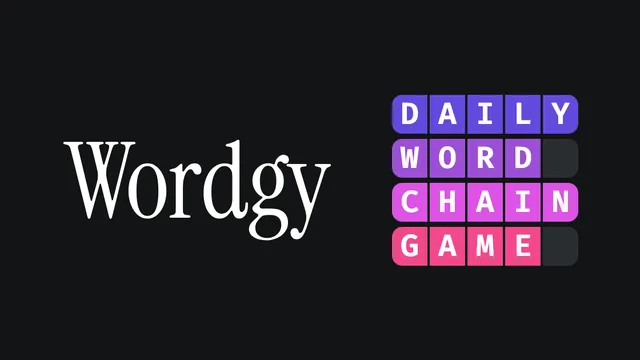
Solve a board of chained hidden words row by row in Wordgy, spend one hint per row, then build chains to challenge friends.
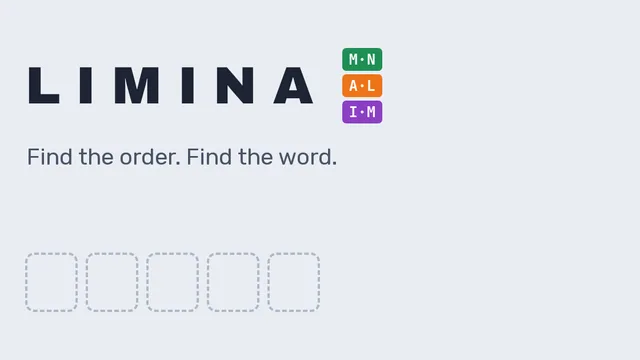
Limina
Every wrong guess in Limina reveals the order of two letters but never their position. Solve the hidden word in six tries.
Clueffy
Read five progressive clues in Clueffy to name one six-letter word in five guesses, with colour feedback after each wrong answer.

Globle
Guess the daily country on a rotating 3D globe in this Globle game, using warmer and cooler hints to close in.